
Book Online
The Silent Tooth Infection That Often Has No Warning Signs
August 30, 2026
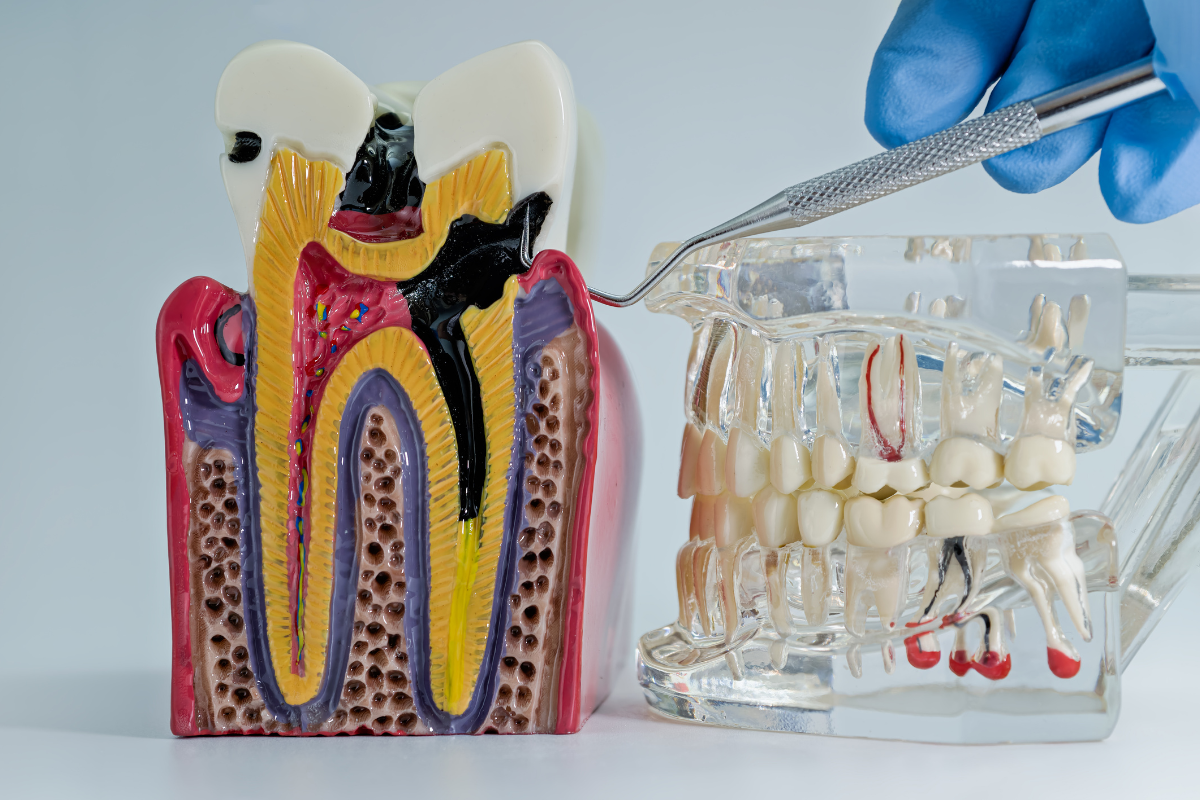
You would think a tooth infection always hurts. Most people believe that if something is wrong inside a tooth, pain will show up right away and tell them to get help. That is not always true. Some infections sit quietly inside a tooth or under the gum line for months, causing no pain at all, while the damage keeps growing underneath. This is exactly the kind of hidden problem that a routine visit, not a last-minute dentist near me search, is built to catch.
This is one of the reasons regular visits to a corpus christi dentist matter so much. A checkup can catch a problem that your body has not warned you about yet. Below, we walk through what a silent tooth infection actually is, why it can hide from you, and what to do if you think you might have one.
What Is a Silent Tooth Infection
A tooth infection, also called a dental abscess, happens when bacteria get inside a tooth, usually through a crack, a deep cavity, or old dental work that has broken down. The infection can spread to the tooth’s root and the bone around it. In a typical case, this causes swelling and sharp pain. But in a silent case, the infection grows slowly enough that your nerve does not send a strong pain signal, or the nerve inside the tooth has already died and can no longer feel anything at all.
This second point is important. Once the nerve inside a tooth dies, pain often stops completely, even though the infection is still active and can keep spreading. Many patients assume this means the problem went away on its own. It did not. It just became quieter and more dangerous.
Why Some Infections Show No Symptoms
There are a few reasons a tooth infection can stay hidden for so long.
The nerve has already died
Once nerve tissue inside a tooth stops working, it cannot send pain signals anymore, even while bacteria continue to spread below the gum line.
The infection is walled off
Your body sometimes builds a small pocket of tissue around the infected area, holding the bacteria in one spot for a while. This can delay swelling or visible symptoms.
Slow, low-grade bacteria
Not every infection is aggressive. Some grow at a slow pace, causing gradual bone loss around the root without ever producing the sudden, sharp pain most people expect.
Pain tolerance and location
Some patients have a higher pain threshold, or the infected tooth sits in a spot where discomfort is easy to dismiss as minor sensitivity or a dull ache from something else, like sinus pressure.
Hidden Warning Signs Worth Watching For
Even without obvious pain, a silent infection often leaves small clues. Paying attention to these can help you catch a problem before it turns into an emergency.
- A tooth that looks slightly darker or grayish compared to the teeth next to it
- A small, persistent bump on the gum that looks like a pimple
- A faint bad taste or mild bad breath that will not go away with brushing
- Slight tenderness when chewing on one particular side, even if it is not sharp pain
- Mild swelling in the face or jaw that comes and goes
- A tooth that feels loose or slightly different when you bite down
If you notice even one of these signs, it is worth having a dentist in Corpus Christi take a look. These signs are easy to brush off, but they are often the only outward clue an infection is present.
Why Silent Infections Are Actually More Dangerous
Pain, uncomfortable as it is, actually does something helpful. It pushes people to get treatment quickly. Silent infections do not have that built-in warning system, so they tend to be caught later, after more damage has already happened.
Left untreated, a hidden infection can slowly eat away at the bone that holds your tooth in place. It can also spread to nearby teeth, or in rare cases, travel further into the jaw, sinuses, or bloodstream. What starts as a small, painless problem can turn into a much bigger health concern if it goes unnoticed for too long.
Silent Infection vs Typical Infection: A Quick Comparison
| Feature | Typical Tooth Infection | Silent Tooth Infection |
| Pain level | Sharp, noticeable pain | Little to no pain |
| Swelling | Often visible and sudden | Mild, may come and go |
| Nerve status | Usually still alive and sensitive | Often already dead |
| How it’s found | Patient seeks help due to pain | Usually found on X-ray during a checkup |
| Risk of delay | Lower, since pain drives quick treatment | Higher, since there is no urgency signal |
| Common cause | Deep decay or recent injury | Old untreated decay or a past injury that healed over |
This comparison shows why routine visits matter just as much as, if not more than, treating pain when it shows up. A silent infection relies entirely on your dentist catching it, since your body is not going to ask for help on its own.
How a Dentist Finds a Silent Infection
During a routine exam, your dentist checks more than what is visible on the surface. Digital X-rays reveal dark spots around the root of a tooth, which usually point to bone loss caused by infection. Cold or heat tests can also show whether the nerve inside a tooth is still alive. Gentle tapping on the tooth may reveal tenderness you had not noticed at home.
This is exactly why skipping checkups can be risky, even if your mouth feels completely fine. A dentist near me often starts the moment pain shows up, but the smarter approach is finding a dental home before anything hurts, so small issues get caught on X-rays long before they turn into bigger problems.
Know Our Dentists
Getting familiar with the people caring for your teeth can make a visit feel a lot less stressful. Here is a look at the team at Tide Dental Orthodontics & Dental Implants in Corpus Christi.
Dr. Joel Khoo completed his dental degree at the National University of Singapore and later earned a Master of Science in Prosthodontics from the University of Iowa. His prosthodontic training gives him strong experience handling complex cases, including infections that have caused damage requiring restoration or dental implants. Dr. Khoo has said his goal is to replace patient fear with calm confidence, and he brings that same careful approach to every exam. He lives locally with his family and stays involved in the Corpus Christi community.
Dr. ReAnn Boss built a broad dental background before becoming an orthodontist, with years of experience in military dental service, private practice, pediatric dentistry, and teaching. She later returned to school for orthodontic training, earning her Master’s in Health Administration along with an orthodontic certificate. A Texas native, Dr. Boss understands both general dental health and the bite and alignment issues that can sometimes contribute to hidden dental problems.
Dr. Tina Huynh grew up in Corpus Christi and studied locally before earning her undergraduate degree at Texas A&M University. She completed her Doctor of Dental Medicine degree and gained experience providing care to underserved communities during her training. As a general dentist, Dr. Huynh focuses on catching problems early and helping nervous patients feel comfortable during every visit, which matters a great deal when a hidden infection needs a calm, clear explanation.
What Treatment Usually Looks Like
Treatment depends on how far the infection has spread. In many cases, a root canal can save the tooth by removing the infected tissue and sealing it off from further bacteria. If the damage is too advanced, extraction may be the safer route, sometimes followed by a dental implant to restore the space. Antibiotics may be used alongside treatment to help control the infection, though they are rarely a stand-alone fix since the source of the bacteria still needs to be addressed directly.
The earlier a silent infection gets found, the more treatment options usually stay on the table. This is one more reason a corpus Christi dentist will often recommend routine X-rays, even for patients who feel completely fine.
Our Patients Review
Reviews from real patients often tell the story better than any explanation can.
“I have been with tide dental for some years & it never fails that I leave completely satisfied & taken care of. It is a clean, welcoming facility. Dr Khoo is hands down one of the best dentist in the city! Very thorough, upfront & perfectly explains the course of treatment. The office staff is very welcoming & all the times I come it’s rare I see someone new, which is a huge plus to know turnover rate there is minimal unlike other dentists I have visited. Will continue to always chose tide dental!”
★★★★★ — (katrinaepps2002)
Feedback like this shows exactly why routine exams matter, even when nothing seems wrong. Catching a silent problem early can save a tooth and a lot of future discomfort.
When to See a Dentist Right Away
If you notice a small bump on your gum, a tooth that has darkened, ongoing bad breath, or mild tenderness while chewing, do not wait for pain to confirm something is wrong. A dentist in corpus christi can check the tooth with an X-ray and let you know right away whether treatment is needed. Waiting only gives a hidden infection more time to spread.
For general reference on oral infections and their risks, resources from the American Dental Association and the Mayo Clinic offer helpful, trustworthy background information for patients who want to learn more.
Take Care of What You Cannot Feel
A silent tooth infection is proof that feeling fine is not the same as being fine. Regular checkups, X-rays, and a dentist who takes the time to look closely are what actually catch these hidden problems before they turn serious.
If it has been a while since your last visit, or if you have noticed any of the small warning signs mentioned above, do not wait. Searching for a dentist near me is a good first step, but choosing a team that takes your long-term health seriously is what really protects your smile. Tide Dental Orthodontics & Dental Implants welcomes new and returning patients across corpus christi for exams, X-rays, and treatment planning. Schedule your visit today and let our team check for what you cannot feel on your own.
Frequently Asked Questions
1. Can a tooth infection really cause no pain at all?
Yes. Once the nerve inside a tooth dies, it can no longer send pain signals, even though the infection may still be active underneath.
2. How is a hidden tooth infection usually discovered?
Most silent infections are found through routine X-rays taken during a regular exam, since they often show no outward symptoms.
3. Is a dark or gray tooth always a sign of infection?
Not always, but a color change can point to nerve damage or infection and is worth having checked.
4. Can antibiotics alone cure a tooth infection?
Antibiotics can help control the spread of bacteria, but the infected tissue usually still needs to be treated directly through a root canal or extraction.
5. What happens if a silent infection is left untreated for too long?
It can slowly damage the bone around the tooth and, in some cases, spread to nearby teeth or other parts of the body.
6. How often should I get dental X-rays to catch problems like this?
Most patients benefit from X-rays about once a year, though your dentist may recommend a different schedule based on your dental history.
7. Does a root canal always save the tooth?
In many cases, yes, especially when the infection is caught early. More advanced damage may require extraction instead.
8. Should I be worried if I have no symptoms but haven’t been to the dentist in years?
It is worth scheduling a checkup soon. The absence of pain does not rule out a problem, and an exam can give you peace of mind either way.
Recent Post
October 29, 2026
The Long-Term Benefits of Correcting Misaligned Teeth and Bite Problems

October 22, 2026
Creating a Practical Morning and Nighttime Oral Hygiene Routine

October 15, 2026
Tooth Pain When Chewing: Common Problems That May Be Hiding Beneath the Surface
October 12, 2026
Smoking During Dental Implant Treatment: How It Can Affect Healing and Long-Term Results
September 29, 2026