
Book Online
Common Causes of Yellow Teeth and Treatment Solutions
October 23, 2025
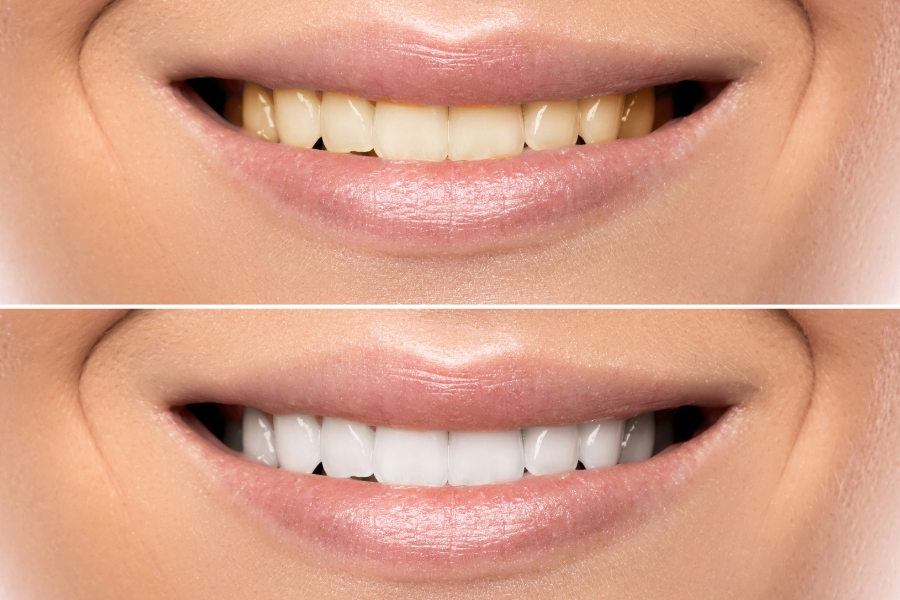
A bright, white smile can boost your confidence and leave a lasting impression. But if you’ve noticed your teeth looking more yellow than they used to, you’re not alone. Tooth discoloration affects millions of people and can happen for many reasons. The good news is that understanding why your teeth turn yellow is the first step toward getting them white again.
Why Do Teeth Turn Yellow?
Food and Drink Stains
Your daily coffee habit might be doing more than waking you up. Dark beverages like coffee, tea, red wine, and cola contain chromogens, which are pigmented molecules that attach to your tooth enamel. Over time, these drinks create stubborn stains that make your teeth look dull and yellow.
Certain foods also contribute to discoloration. Berries, tomato sauce, soy sauce, and balsamic vinegar can all leave their mark on your teeth. Even healthy choices like blueberries and beets can cause staining if you eat them often.
Tobacco Use
Smoking or chewing tobacco is one of the fastest ways to turn your teeth yellow. Nicotine and tar create brownish or yellowish stains that sink deep into the tooth enamel. These stains are harder to remove than those from food and drinks. If you’re a tobacco user, quitting will not only improve your oral health but also help restore your smile’s natural brightness.
Poor Oral Hygiene
Skipping brushing and flossing allows plaque and food particles to build up on your teeth. This buildup creates a yellowish film that makes your teeth look dirty. When plaque hardens into tartar, it becomes even more noticeable and can only be removed by a dentist in Corpus Christi or your local dental professional.
Age and Enamel Wear
As you get older, the outer layer of enamel on your teeth naturally wears down. This reveals more of the yellow dentin underneath. While this is a normal part of aging, it can make your teeth appear more yellow than they did when you were younger. Grinding your teeth or using a hard toothbrush can speed up this process.
Medications and Health Conditions
Some medications can cause tooth discoloration as a side effect. Antibiotics like tetracycline and doxycycline are known to stain teeth, especially if taken during childhood when teeth are still developing. Antihistamines, blood pressure medications, and chemotherapy can also affect tooth color.
Certain health conditions impact your enamel too. Acid reflux exposes your teeth to stomach acid, which weakens enamel and makes staining easier. Similarly, dry mouth reduces saliva production, which normally helps wash away food particles and bacteria.
Genetics
Sometimes yellow teeth run in the family. Your genetic makeup determines your natural enamel thickness and color. If your parents had naturally yellow teeth, you might too. This doesn’t mean your teeth are unhealthy, just that they have a different natural shade.
Treatment Solutions That Work
Professional Teeth Whitening
The most effective way to whiten yellow teeth is through professional treatment. A dentist in corpus christi can offer in-office whitening that delivers dramatic results in just one visit. These treatments use stronger bleaching agents than over-the-counter products and can lighten your teeth by several shades.
Take-home whitening kits from your dentist provide another option. These custom-fitted trays and professional-grade gel let you whiten your teeth at your own pace while still getting professional results.
Good Oral Hygiene Habits
Prevention starts at home. Brush your teeth twice daily with fluoride toothpaste and floss once a day. This removes plaque before it hardens and prevents new stains from forming. Using a whitening toothpaste can help remove surface stains, though it won’t change your natural tooth color.
Regular dental cleanings every six months are essential. Your dental hygienist can remove tartar buildup and polish away surface stains that regular brushing misses.
Lifestyle Changes
Making small changes to your daily routine can prevent further yellowing. Drink dark beverages through a straw to minimize contact with your teeth. Rinse your mouth with water after eating or drinking staining foods. If possible, brush your teeth about 30 minutes after consuming acidic foods or drinks.
Quitting tobacco is one of the best things you can do for your teeth and overall health. Talk to your doctor about smoking cessation programs if you need help.
Dental Veneers and Bonding
For severe discoloration that doesn’t respond to whitening, dental veneers offer a permanent solution. These thin shells cover the front of your teeth and can be made in any shade of white you prefer. Dental bonding is another option where tooth-colored resin is applied to cover stains and reshape teeth.
FAQs: Yellow Teeth
1. Can yellow teeth become white again?
Yes, most yellow teeth can be whitened through professional treatments or good oral care. The success depends on what caused the yellowing in the first place.
2. How long does professional teeth whitening last?
Results typically last from six months to two years. This varies based on your habits and how well you maintain your teeth after treatment.
3. Is teeth whitening safe?
Professional teeth whitening is safe when done under a dentist’s supervision. Some people may experience temporary sensitivity, but this usually goes away quickly.
4. Do whitening toothpastes really work?
Whitening toothpastes can remove surface stains but won’t change your natural tooth color. They work best for maintaining results after professional whitening.
5. At what age do teeth start turning yellow?
Teeth naturally yellow with age as enamel wears down. This process can start in your 20s or 30s but becomes more noticeable after age 40.
6. Can I whiten my teeth if I have sensitive teeth?
Yes, but talk to your dentist first. They can recommend gentler whitening options or treatments to reduce sensitivity before whitening.
7. Will my insurance cover teeth whitening?
Most dental insurance considers whitening a cosmetic procedure and doesn’t cover it. Check with your provider to be sure.
When to See Your Dentist
If your teeth are yellow despite good oral hygiene, schedule an appointment with a dentist in Corpus Christi or a dentist near me in your area. They can identify the cause of your discoloration and recommend the best treatment for your situation.
Sudden or unusual tooth discoloration might signal a deeper problem like tooth decay or nerve damage. Don’t ignore these changes. Early treatment can save your tooth and prevent more serious issues.
Conclusion
Yellow teeth don’t have to be permanent. With the right treatment and good oral care habits, you can restore your smile’s natural brightness. Whether you choose professional whitening, improve your daily routine, or make lifestyle changes, the path to whiter teeth starts with taking action.
Don’t let yellow teeth hold you back from smiling with confidence. Contact your local dental office today to discuss which whitening option is right for you. Your brighter, whiter smile is just one appointment away.
Recent Post

May 29, 2026
The Do’s and Don’ts of Routine Dental Care for All Ages
May 22, 2026
How Dentists Detect Early Signs of Serious Health Conditions

May 15, 2026
Smoking and Dental Implants: Risks You Should Know
May 9, 2026
Daily Dental Care Routine: What You Should Be Doing Every Day

April 30, 2026