
Book Online
How Long Do Dental Implants Last? A Complete Guide for Corpus Christi Patients
March 3, 2025
Missing a tooth changes how you eat, talk, and smile in photos. If you are looking into replacement options, you probably want a straight answer to one question: how long will this actually last? It’s a fair question, and the answer matters more than most marketing pages let on.
Most people want two things when they start looking into a replacement tooth. They want it to look and work like a real one, and they want to know it will hold up for years without constant trouble. That is exactly what people searching for dental implants corpus christi are usually trying to figure out. The good news is that implants are built to do exactly that, and this guide walks through the real numbers, the reasons behind them, and what you can do to get the most out of your investment.
This guide is written for exactly that moment of uncertainty. Whether you are comparing tooth replacement options for the first time or you already have an implant and want to protect it, you might have typed “dentist near me” into your phone after a tooth started bothering you. This article breaks things down in plain language, no jargon, no guesswork, just what you need to make a confident choice.
How Long Do Dental Implants Actually Last
On average, a dental implant post can last 25 years or longer, and many patients keep theirs for life. The crown on top, which is the visible tooth-shaped part, typically holds up for 10 to 15 years before normal wear calls for a replacement. That is a very different lifespan than a bridge or a removable denture, and the difference comes down to how implants are built.
Clinical research backs this up. Long-term studies tracking implants for 10, 20, and even 40 years consistently report survival rates between 90 and 98 percent. A large cohort study following more than 10,000 implants for up to 22 years found survival rates above 95 percent even a decade out. Numbers like that are hard to match with any other tooth replacement method.
Of course, averages only tell part of the story. Your own results depend on your bone health, your daily habits, and how well the implant was placed in the first place. That is why picking an experienced provider for your dental implant treatment matters just as much as the implant itself.
Why Implants Are Built to Last
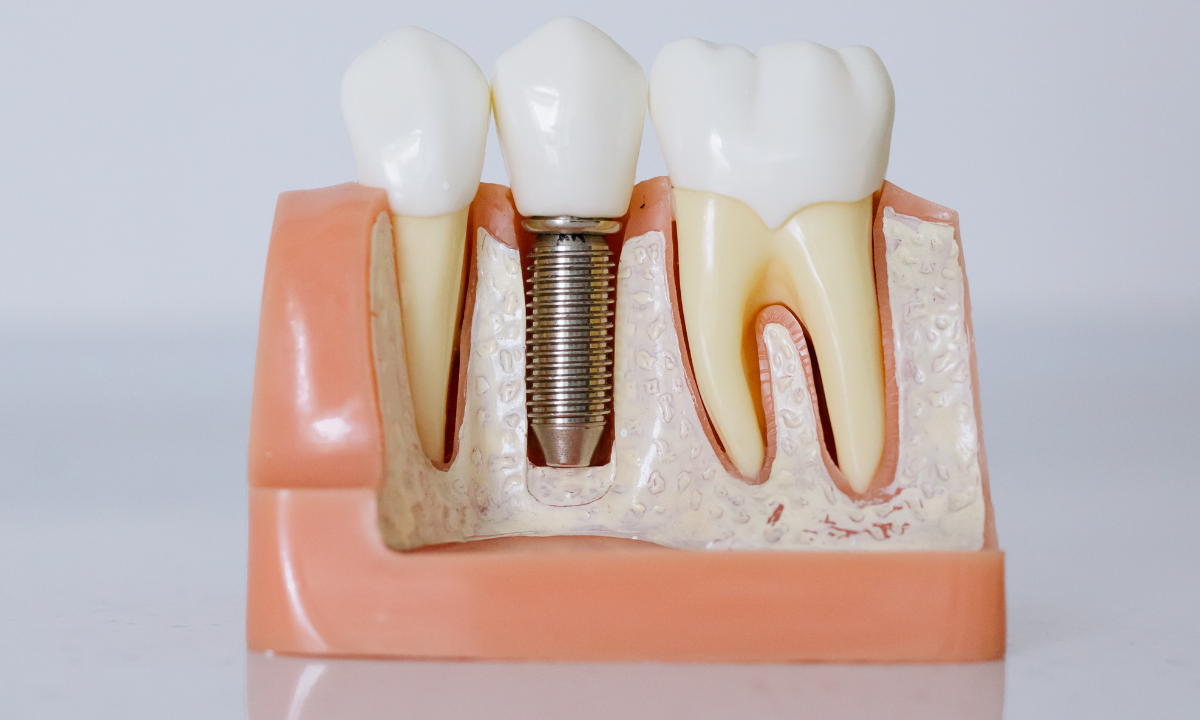
A dental implant has three parts working together: a titanium post, a connector called an abutment, and a crown on top. The post is the part that makes implants so different from other options. It is placed directly into your jawbone, and over the following months, your bone actually grows around it and locks it in place. Dentists call this process osseointegration.
Titanium is used because your body accepts it well. It does not trigger rejection the way some materials do, and once it fuses with bone, it behaves almost like a natural tooth root. This is the entire reason implants outlast bridges and dentures, which sit on top of the gum or rely on neighboring teeth for support instead of anchoring into the bone itself.
Newer dental implant technology has also improved success rates over the past decade. Digital scanning lets dentists plan implant placement with more precision, 3D imaging shows exactly where bone density is strongest, and improved surface coatings on the implant post help bone attach faster and more securely. Patients researching dental implants corpus christi options today are benefiting from tools that simply did not exist a decade ago. None of this replaces good aftercare, but it does mean today’s implants are placed with far more accuracy than implants from even ten years ago.
What About the Crown on Top
The post can outlast decades, but the crown works harder. It absorbs the force of chewing every single day, and over time that wear adds up. Most crowns last 10 to 15 years before they show enough wear to need replacing. Grinding your teeth at night, biting into hard foods, or skipping regular checkups can shorten that window.
The upside is that replacing a crown is a simple, non-surgical process. Your implant post stays exactly where it is, and your dentist just attaches a new crown on top. Patients often describe it as similar to getting a new filling, not a repeat of the original procedure.
Dental Implants Compared to Other Tooth Replacement Options
Seeing the numbers side by side makes the difference easier to understand. Here is how implants stack up against the two most common alternatives.
| Feature | Dental Implants | Fixed Bridge | Removable Denture |
| Average lifespan | 25+ years (post), 10-15 years (crown) | 10-15 years | 5-8 years |
| Affects neighboring teeth | No | Yes, teeth are filed down | No |
| Prevents bone loss | Yes | No | No |
| Feels like a natural tooth | Yes | Mostly | Less so, can shift |
| Long-term cost | Higher upfront, lower over time | Moderate, needs replacement | Lower upfront, ongoing adjustments |
Among the various tooth replacement options available today, implants are the only choice that replaces the tooth root itself, which is exactly why they protect your jawbone and keep your bite stable for so long. It’s also the main reason so many patients weighing dental implants corpus christi treatments end up choosing implants over a bridge or denture once they see the numbers side by side. That kind of long-term stability is worth factoring into any decision about replacing a missing tooth.
Six Habits That Help Your Implant Go the Distance
Good habits do more for implant lifespan than any product on the market. Here is what actually moves the needle.
Brush and floss daily
Clean your implant the same way you would a natural tooth, twice-daily brushing with a soft brush and daily flossing around the crown.
Keep up with checkups
Our dental services include routine visits built to catch small issues, like early gum irritation, before they turn into bigger problems.
Skip the cigarettes
Smoking slows healing and interferes with how your bone bonds to the implant post, and it is one of the biggest causes of early implant failure.
Watch what you bite
Ice, hard candy, and using your teeth as tools all put unnecessary stress on the crown.
Wear a night guard
If you grind. Grinding wears down crowns faster than normal chewing ever will.
Eat well
A diet with enough calcium and vitamin D supports the bone that holds your implant in place.
None of this requires special products or extra time. It’s mostly the same care your natural teeth already need, just applied consistently.
Meet Our Dentists
Every implant case is different, and the outcome depends heavily on who plans and places it. At Tide Dental Orthodontics & Dental Implants, our team brings training that spans general dentistry, prosthodontics, and orthodontics under one roof.
Dr. Joel Khoo earned his Bachelor of Dental Surgery from the National University of Singapore and went on to complete a Master of Science in Prosthodontics at the University of Iowa. Prosthodontics is the specialty focused specifically on rebuilding and replacing teeth, which makes Dr. Khoo the doctor patients typically see for implant planning and restoration. He has lived and practiced in Corpus Christi for years and describes the biggest reward of his work as helping patients move past dental fear and into confidence about their smile again.
Dr. Tina Huynh grew up in Corpus Christi and returned home to practice general dentistry after earning her Doctor of Dental Medicine from Roseman University of Health Sciences College of Dental Medicine. She also completed graduate coursework at Texas A&M University and the University of Texas at San Antonio. Her approach centers on making every visit feel calm and unhurried, which matters a lot for patients who feel nervous walking in the door.
Dr. ReAnn Boss, a Texas native, leads our orthodontic care after earning her Doctor of Dental Surgery from what is now the Texas A&M College of Dentistry, plus advanced training through the Air Force and a specialty certificate in orthodontics from A.T. Still University. While her focus is orthodontics, her broad general dentistry background means she understands how implants, bite alignment, and long-term oral health all connect.
Together, this team covers the full range of care that keeps a dental implant treatment successful for the long run, from the first consultation through years of follow-up visits.
When to Talk to a Dentist About Implants
You do not need to wait until a tooth is causing pain to start this conversation. Good candidates for implants include patients missing one tooth, several teeth, or dealing with a denture that no longer fits well. Bone density matters too, and if you have been missing a tooth for a long time, your dentist can check whether a bone graft is needed first.
Trusting your gut here is smart. If you are typing “dentist near me” into a search bar right now because a tooth is bothering you, that instinct to act sooner rather than later is the right one. Small problems are easier and cheaper to fix than problems that have had years to get worse.
Frequently Asked Questions
1. Do dental implants ever need to be replaced?
The titanium post rarely needs replacement and often lasts a lifetime. The crown on top is the part that typically gets swapped out after ten to fifteen years of normal wear.
2. Can a dental implant fail years after it was placed?
Yes, though it is uncommon. Gum disease, smoking, teeth grinding, or an underlying health condition can all contribute to late implant failure, which is why regular checkups matter even after healing is complete.
3. Is the implant procedure painful?
Most patients describe the recovery as similar to a tooth extraction. Local anesthesia keeps the procedure itself comfortable, and any soreness afterward is usually managed with over-the-counter pain relief.
4. How soon can I eat normally after getting an implant?
Soft foods are recommended for about a week while the surgical site heals. Full chewing function typically returns once the crown is placed, several months after the post has integrated with the bone.
5. Are dental implants worth the higher upfront cost?
Over a 20 to 25 year period, implants often cost less than repeatedly replacing bridges or dentures, since they are not replaced nearly as often and do not require ongoing adjustments.
6. What happens if I do not replace a missing tooth at all?
The jawbone in that area begins to shrink without a tooth root to stimulate it, neighboring teeth can shift out of position, and your bite can become uneven over time.
7. Can smokers get dental implants?
Yes, but smoking lowers success rates and slows healing. Many dentists recommend quitting, or at least pausing, around the time of surgery to give the implant its best chance to integrate properly.
8. How do I know if I am a candidate for an implant?
A dental exam with x-rays or a 3D scan will show whether you have enough healthy bone. If bone loss has occurred, a graft can often build up the area so an implant is still possible.
Ready to Talk About Your Options
A missing tooth does not have to be a long-term problem. With the right planning and a team that knows what they are doing, an implant can be the last tooth replacement decision you ever have to make. For patients weighing dental implants corpus christi options, Tide Dental Orthodontics & Dental Implants has helped people across the area restore their smiles with treatment built around each person’s specific needs.
You do not have to figure this out on your own. If you have been searching for a trusted dentist near me and want a straight answer about whether an implant is right for you, our team is ready to walk you through it. Schedule an appointment with Tide Dental Orthodontics & Dental Implants today and take the first step toward a smile that lasts.
Recent Post
October 29, 2026
The Long-Term Benefits of Correcting Misaligned Teeth and Bite Problems
October 22, 2026
Creating a Practical Morning and Nighttime Oral Hygiene Routine

October 15, 2026
Tooth Pain When Chewing: Common Problems That May Be Hiding Beneath the Surface
October 12, 2026
Smoking During Dental Implant Treatment: How It Can Affect Healing and Long-Term Results
September 29, 2026