
Book Online
7 Common Dental Terms You Should Know
February 3, 2020
Ever sat in the dentist’s chair and heard a word you didn’t understand? You nod along, but inside you’re wondering what it actually means for your teeth. You are not alone. Many patients leave a checkup with more questions than answers, simply because dental language can feel confusing.
That’s exactly why our team put this guide together. As a trusted corpus christi dentist, we believe patients make better choices when they understand their own care. Whether you’re searching for a dentist near me for the first time or you’ve been coming to us for years, knowing these seven terms will help you feel more confident at every visit.
Let’s break down the words you’re most likely to hear, one at a time.
Why These Words Matter to You
Dental visits move fast. Between the exam, the x-rays, and the treatment plan, it’s easy to miss what a term actually means. When you understand the basics, you ask better questions. You also make smarter decisions about your own mouth and your family’s oral health.
Below, we’ll walk through seven terms that come up often in general dentistry. Each one connects to a real problem your teeth might face, and a real solution we offer.
1. Cavity
A cavity is a small hole in your tooth. It forms when bacteria in your mouth create acid that wears away the hard outer layer of your tooth, called enamel. Left alone, a cavity grows bigger and can reach the nerve inside your tooth, which causes pain.
The good news? Cavities are easy to catch early with regular checkups. Your dentist finds most of them on an x-ray, often before you feel anything at all.
2. Plaque and Tartar
Plaque is the soft, sticky film that builds up on your teeth every day. It’s made of bacteria, food bits, and saliva. Brushing and flossing remove plaque before it causes harm.
If plaque stays on your teeth too long, it hardens into tartar. Tartar sticks to the tooth surface and cannot be removed with a toothbrush at home. Only a dental cleaning can take it off. This is one reason routine visits matter so much, even when your teeth feel fine.
3. Gingivitis
Gingivitis is the early stage of gum disease. Your gums may look red, feel puffy, or bleed a little when you brush. It sounds scary, but gingivitis is usually easy to reverse with better brushing, flossing, and a professional cleaning.
If it’s ignored, gingivitis can turn into a more serious gum problem that affects the bone holding your teeth in place. Catching it early keeps your smile and your gums healthy for the long run.
4. Filling
A filling repairs a tooth after a cavity has been cleaned out. Your dentist removes the decayed part of the tooth, then fills the space with a tooth-colored material. Fillings are quick, common, and one of the most routine treatments in dentistry.
Most patients feel little to no discomfort during a filling, since the area is numbed first. Once it’s done, your tooth is protected from further decay in that spot.
5. Crown
A crown is a cap that covers a tooth completely. Dentists use crowns when a tooth is too weak, cracked, or worn down for a simple filling to fix. Think of a crown as a strong shell that protects what’s left of your natural tooth while restoring its shape and strength.
Crowns are also used to top off dental implants and to protect teeth after a root canal. They’re made to match the color of your other teeth, so your smile still looks natural.
6. Root Canal
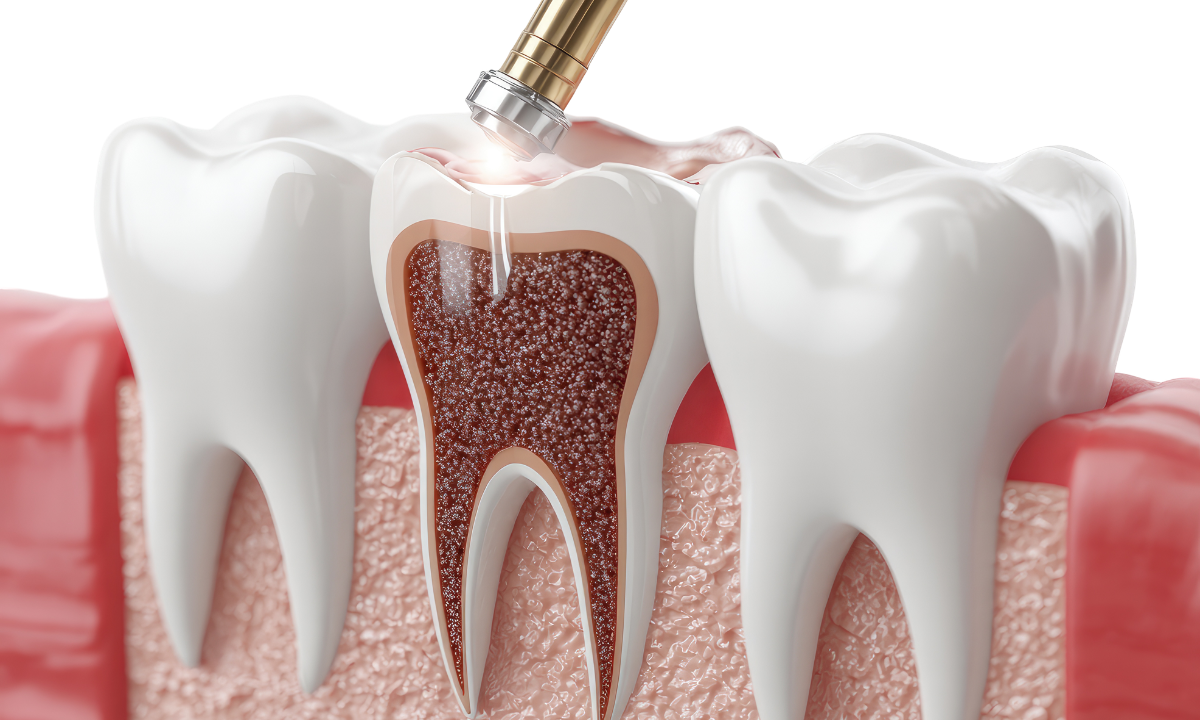
A root canal treats the soft tissue inside your tooth, called pulp, when it becomes infected or badly inflamed. This can happen from a deep cavity, a crack, or an injury. During the procedure, your dentist removes the infected tissue, cleans the inside of the tooth, and seals it to stop further problems.
Many patients dread this word, but a root canal actually relieves pain rather than causing it. It also saves a tooth that would otherwise need to come out.
7. Extraction
An extraction means removing a tooth completely. Dentists try to save a tooth whenever possible, but sometimes removal is the healthiest choice. This might happen with a tooth that’s too damaged to repair, a wisdom tooth causing crowding, or a tooth that’s putting your other teeth at risk.
After an extraction, your dentist will talk with you about options to replace the tooth if needed, such as a bridge or an implant.
Filling, Crown, or Root Canal? A Quick Comparison
Patients often ask how a dentist decides between these three treatments. Here’s a simple breakdown to help you understand what each one addresses.
| Treatment | Used When | What It Involves |
| Filling | Small to moderate cavity | Decay removed, space filled with material |
| Crown | Tooth is cracked, weak, or heavily worn | Tooth covered with a protective cap |
| Root Canal | Infection or damage reaches the tooth’s inner pulp | Infected tissue removed, tooth cleaned and sealed |
If you’re not sure which one your tooth needs, that’s a normal question. A short exam with our corpus christi dentists team usually clears it up fast, often with a plan you can start the same week.
Know Our Dentists
Getting familiar with dental terms is easier when you know the people explaining them to you. Here’s a closer look at the doctors on our team.
Dr. Joel Khoo earned his Bachelor of Dental Surgery from the National University of Singapore, then went on to complete a Master of Science in Prosthodontics at the University of Iowa. As a prosthodontist, he focuses on restoring smiles for patients with more complex dental needs, including crowns, full mouth rehabilitation, and dental implants. Dr. Khoo lives in Corpus Christi with his wife and two children, and he’s known for helping nervous patients feel calm and cared for.
Dr. ReAnn Boss is a Texas native who grew up north of Dallas. She earned her Doctor of Dental Surgery degree from what is now the Texas A&M College of Dentistry, then completed a residency in Advanced Education in General Dentistry through the Air Force. After seven years practicing general dentistry, including pediatric care and teaching at the dental school level, she returned to school to become an orthodontist. She holds a Master’s in Health Administration along with a Certificate in Orthodontics from A.T. Still University’s Arizona School of Dentistry and Oral Health.
Dr. Tina Huynh grew up right here in Corpus Christi and attended local schools before heading to Texas A&M University for her undergraduate degree. She later earned her master’s at the University of Texas at San Antonio and completed her Doctor of Dental Medicine at Roseman University of Health Sciences College of Dental Medicine in Utah. During her training, she worked with underserved communities through an externship, which shaped her patient-first approach. As a general dentist, she handles everyday care like fillings, checkups, and preventive treatment with a calm, welcoming style.
Together, this team covers everything from routine fillings to advanced restorative work, all under one roof.
Frequently Asked Questions
1. Is a cavity always painful?
Not always. Many cavities have no symptoms in the early stages, which is why regular checkups and x-rays matter so much.
2. Can gum disease be reversed?
Early gum disease, known as gingivitis, can often be reversed with better home care and a professional cleaning. More advanced stages need ongoing treatment.
3. How long does a filling last?
Most fillings last many years with proper care, though this depends on the material used and your daily oral hygiene habits.
4. Does a root canal hurt?
The procedure itself is done under local numbing, so most patients feel pressure rather than pain. Many describe it as similar to getting a filling.
5. How do I know if I need a crown instead of a filling?
This depends on how much of the natural tooth is left. Your dentist will look at the size and location of the damage to recommend the right option.
6. What happens after a tooth is pulled?
Your gum tissue heals over the next week or two. Your dentist may also discuss replacement options, such as a bridge or implant, depending on the tooth’s location.
7. How often should I get a professional cleaning?
Most patients benefit from a cleaning every six months, though some may need more frequent visits based on their gum health.
8. Can plaque buildup be prevented at home?
Yes. Brushing twice a day, flossing daily, and limiting sugary snacks all help keep plaque from turning into tartar.
Ready to Take the Next Step?
Understanding these seven terms gives you a better handle on your own oral health, and a stronger voice in every conversation with your dental team. If any of this sounds familiar, from sensitive teeth to a nagging question about a filling, now is a good time to get answers. Schedule an appointment with Tide Dental Orthodontics & Dental Implants today. If you’ve been searching for a dentist near me in the Corpus Christi area, our team is ready to walk you through your options and build a plan that fits your smile.
Recent Post
November 15, 2026
What Happens If I Don’t Finish My Orthodontic Treatment?
November 13, 2026
What Are My Options If I’m Missing Back Teeth?

November 10, 2026
Is Your Child Ready for Braces? Signs Orthodontists Look For Early
November 10, 2026
Stop Gum Disease Before It Starts: Why Cleanings Matter Most
October 29, 2026